Servant Keeper review: is it worth it in 2026?
By Sankalp Jonna · Last reviewed April 2026
Servant Keeper
Long-running desktop-era membership database now offered as a cloud subscription, beloved by older staff.
Visit Servant Keeper ↗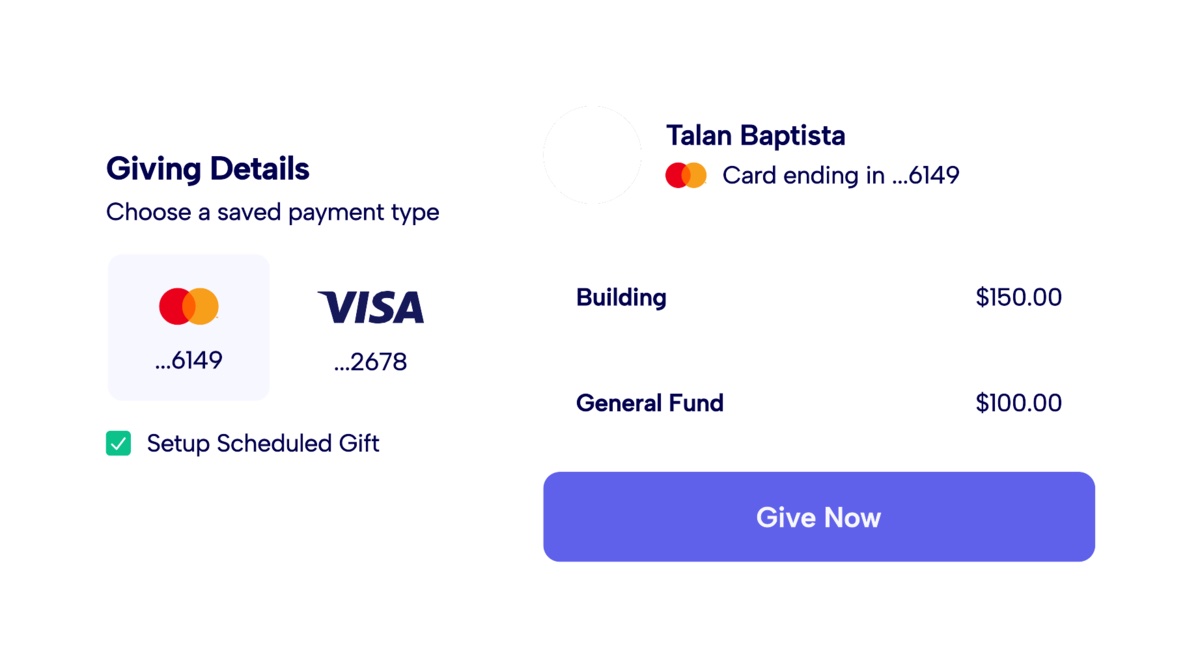
Servant Keeper is the answer to a specific question: 'Our 70-year-old bookkeeper has used this for 20 years and refuses to switch.' That's not a knock, institutional trust like that is worth real money, and forcing a tenured volunteer onto a new system is how churches lose their finance person mid-tax season. For continuity, Servant Keeper still has a real role.
For anyone starting fresh in 2026, this is a tool whose ceiling is low. Servant PC Resources has been making this software since 1991, and the cloud version is a port of the desktop one rather than a reimagining.² The gap between Servant Keeper and Breeze or ChurchTrac at similar prices has only widened over the last five years.⁴ We respect the longevity. We'd still recommend most readers look elsewhere unless continuity matters more than capability.
What it is
Servant Keeper is a church management database originally launched in 1991 as a Windows desktop product by Servant PC Resources, a Lititz, Pennsylvania company.² The desktop product (Servant Keeper 8) is still sold today as a one-time perpetual license, genuinely rare in church software in 2026 and a real reason some churches stick with it.¹ Servant Keeper Online (SK Online) is the cloud subscription product the company has been building out since the late 2010s.
The core product covers what a long-time church bookkeeper needs: a member database with custom fields, contribution tracking with mature year-end statement generation, basic event registration, and integrations with Vanco or EasyTithe for online giving. Mass email and SMS are available; check-in exists in a basic form, though dedicated kids check-in workflows are essentially absent. Volunteer scheduling is not really part of the product.
The cloud version's lineage shows. Workflows that originated as desktop interactions have been ported to a web UI, and it still feels like a port — pages that should be modal interactions are full-screen forms, navigation is heavier than modern SaaS, and the mobile app is limited and not a primary way to use the product. The trade-off is that the underlying contribution and reporting logic is mature and trusted by bookkeepers who have used it for decades.
Who it’s for
Servant Keeper is for small, traditional churches with a tenured bookkeeper or office administrator who already knows the desktop product and trusts it. The classic situation is a 100-300-person church where someone has been running Servant Keeper since the early 2000s, knows every contribution-tracking quirk, and is the most important institutional knowledge in the building. Forcing that person onto Breeze or Planning Center mid-career is a real risk.
It is not the right pick for any church starting fresh, for staffs that are mobile-first or volunteer-heavy, or for churches whose primary problem is modern check-in or worship scheduling. We'd specifically push back on Servant Keeper for any greenfield ChMS decision in 2026 — Breeze, ChurchTrac, and Planning Center all do more for similar money and feel like products built in the cloud era because they were.
Key features
The strongest part of the product. Year-end giving statements, pledge tracking, and IRS-compliant reporting that long-time bookkeepers know inside and out. The reason most existing customers stay.
Servant Keeper 8 is still sold as a one-time perpetual license at around $499. Genuinely rare in {year} — almost no other church software offers this. Useful for tiny churches without reliable internet.
The cloud version, starting around $14.99/month and scaling with active record count. Same data model as the desktop version, ported to a web UI.
Online giving via Vanco or EasyTithe (both Ministry Brands properties). Rates are around 2.75% + $0.30. Integration is functional, though the donor experience is dated compared to Tithe.ly or Givelify.
Customer support reportedly answers the phone and walks new users through setup. Uncommon at this price tier and a real factor for less-technical office staff.
Over 30 years in business — longer than most competitors in this list. The data and workflows aren't going to be orphaned by an acquisition or pivot.
Volunteer scheduling, modern kids check-in, and a primary mobile workflow are essentially absent. The product is a database and contribution tool first; everything else is secondary.
Pros & cons
- Contribution tracking and year-end statement generation are mature and trusted by long-time church bookkeepers.
- Still offers a perpetual desktop license, which is genuinely rare and useful for tiny churches without internet reliance.
- Reasonable monthly pricing on the cloud version, and tiering is transparent.
- Customer support reportedly answers the phone and is willing to walk new users through setup.
- Long track record — over 30 years in business — gives confidence the data won't be orphaned by a pivot.
- Interface and workflows clearly originated as desktop software; the cloud version still feels like a port, not a redesign.
- Volunteer scheduling and modern child check-in are essentially missing.
- Mobile app is limited and not a primary way to use the product.
- Integration with modern marketing and communications tools is shallow.
- Difficult to recommend to a younger staff that has used Planning Center or Breeze elsewhere.
Pricing
Servant Keeper has the most unusual pricing structure in this list. SK Online (Basic) starts at $14.99/month for cloud-hosted membership and contributions on a small record cap, with the Standard tier at $29.99/month adding events, attendance, and additional users.¹ Servant Keeper 8 is sold as a one-time perpetual desktop license at around $499, pay once, run it on a Windows PC, no subscription.¹
The perpetual desktop license is genuinely rare and useful for tiny churches that want to own their software outright without a recurring bill. The cloud pricing is reasonable but not aggressive — Breeze at $72/month covers more capability for not much more money, and ChurchTrac at $9-24/month covers more for less. The pricing makes sense as a continuation of a long-running product, less so as a competitive offer in a 2026 buying cycle.
| Plan | Price | Includes |
|---|---|---|
| SK Online (Basic) | $14.99/month | Cloud-hosted membership and contributions; pricing scales with active records. |
| SK Online (Standard) | $29.99/month | Adds events, attendance, and additional users at a higher record cap. |
| Servant Keeper 8 (desktop) | $499/one-time | Traditional perpetual desktop license still sold for one-time purchase. |
Transaction fees: Varies by integrated processor (Vanco/EasyTithe), typically ~2.75% + $0.30
Alternatives
Flat-fee, simple ChMS that wins on pricing transparency for small and mid-size churches.
Quietly capable, low-cost ChMS with built-in accounting that punches well above its price.
Long-running giving processor now consolidated under Ministry Brands, mostly maintained for its existing base.
Verdict
We'd recommend Servant Keeper in exactly one scenario: your existing bookkeeper already uses it, knows it cold, and switching tools would create more risk than it solves. In that case, the perpetual license or low-cost cloud subscription is a perfectly reasonable way to keep the lights on without forcing a system change. We've seen that calculus play out at small Methodist and Lutheran churches where the volunteer treasurer is also the most important institutional anchor on staff, and the answer is: don't break what's working.
For any new buyer in 2026, look elsewhere. Breeze is cleaner and covers more ground at a similar price. ChurchTrac includes real fund accounting at a lower price. Planning Center People is genuinely free up to 250 records and meaningfully more modern. The case for Servant Keeper as a primary choice in a competitive evaluation is hard to make — the product hasn't been reimagined for the cloud era, and the gap with newer competitors keeps widening.
Sources
- Servant Keeper pricing page, accessed 2026-05
- Servant PC Resources company history
- Servant Keeper product overview
- Wisefig internal testing notes (hands-on)