The 5 best church website builders in 2026
By Sankalp Jonna · Last reviewed April 2026
Church website builders are CMS tools (some church-specific, some generic like Squarespace) that produce a public-facing church homepage, sermon archive, event calendar, and embedded giving form, ideally pulling data from the same ChMS the staff uses internally. The honest truth is that most churches don't need a church-specific one. Squarespace, Wix, and Webflow build better church websites than half the church-specific tools on the market, and they cost less. The reason a church-specific builder might still make sense is integration: if your sermon archive, online giving form, and event calendar live in your ChMS, having a website that pulls from the same database removes a layer of double-data-entry that volunteers will never maintain.
That's the bar. A church website builder has to either match the design quality of generic builders or earn its keep through ChMS integration. Most don't clear it. The six we cover below are the ones that do, and even within that set, three of them we'd only recommend if you're already running the matching ChMS.
Writing is AI-assisted from raw testing notes⁵. Judgments and rankings are ours. We have no affiliate relationships with any vendor below.
What makes a great church website builders?
Here’s what we look for when we evaluate this category. Every tool below was scored against the same criteria.
Whether the templates look like a {year} church or like a 2015 church, and how much custom work it takes to close the gap.
How tightly the website pulls events, sermons, and giving from the church's existing database without manual sync.
How easily a non-technical staff member can update content without breaking the design.
Whether the templates produce a real mobile experience or a desktop site that's been visually compressed.
What the all-in monthly cost looks like once you account for hosting, domains, and any required suite bundling.
Comparison at a glance
| Tool | Score | Best for | Pricing | Free plan | Standout |
|---|---|---|---|---|---|
| Tithe.ly | 8.4 | Tithe.ly churches who want a clean mobile-first website inside the same monthly bill as giving and ChMS. | Free tier available | ✓ | Free giving plan with no monthly fee is the most aggressive pricing in the category by a wide margin. |
| Subsplash | 8.0 | Subsplash customers whose website needs to share content with the branded mobile app and livestream library. | Custom pricing | — | The custom-branded app is the best in the category and the only one that consistently feels like a real native product. |
| Elexio | 7.2 | Mid-size traditional churches in the Ministry Brands ecosystem who want one vendor for ChMS and a basic CMS. | Custom pricing | — | One of the few mid-market suites that genuinely bundles a credible website builder with the ChMS. |
| Pushpay (with Church Community Builder) | 8.2 | Large churches on Pushpay/CCB who add a website module to consolidate their digital presence under one CSM relationship. | Custom pricing | — | The donor-app experience and high-touch account management are unmatched at the megachurch scale. |
| Rock RMS | 8.5 | Multi-site churches with internal IT capacity who want their website and ChMS to share one user database and CMS. | Free tier available | ✓ | A workflow engine and data model that can be molded to fit any church operation, with no licensing ceiling. |
1. Tithe.ly
Aggressively priced giving platform with a growing ChMS, app, and website stack underneath it.
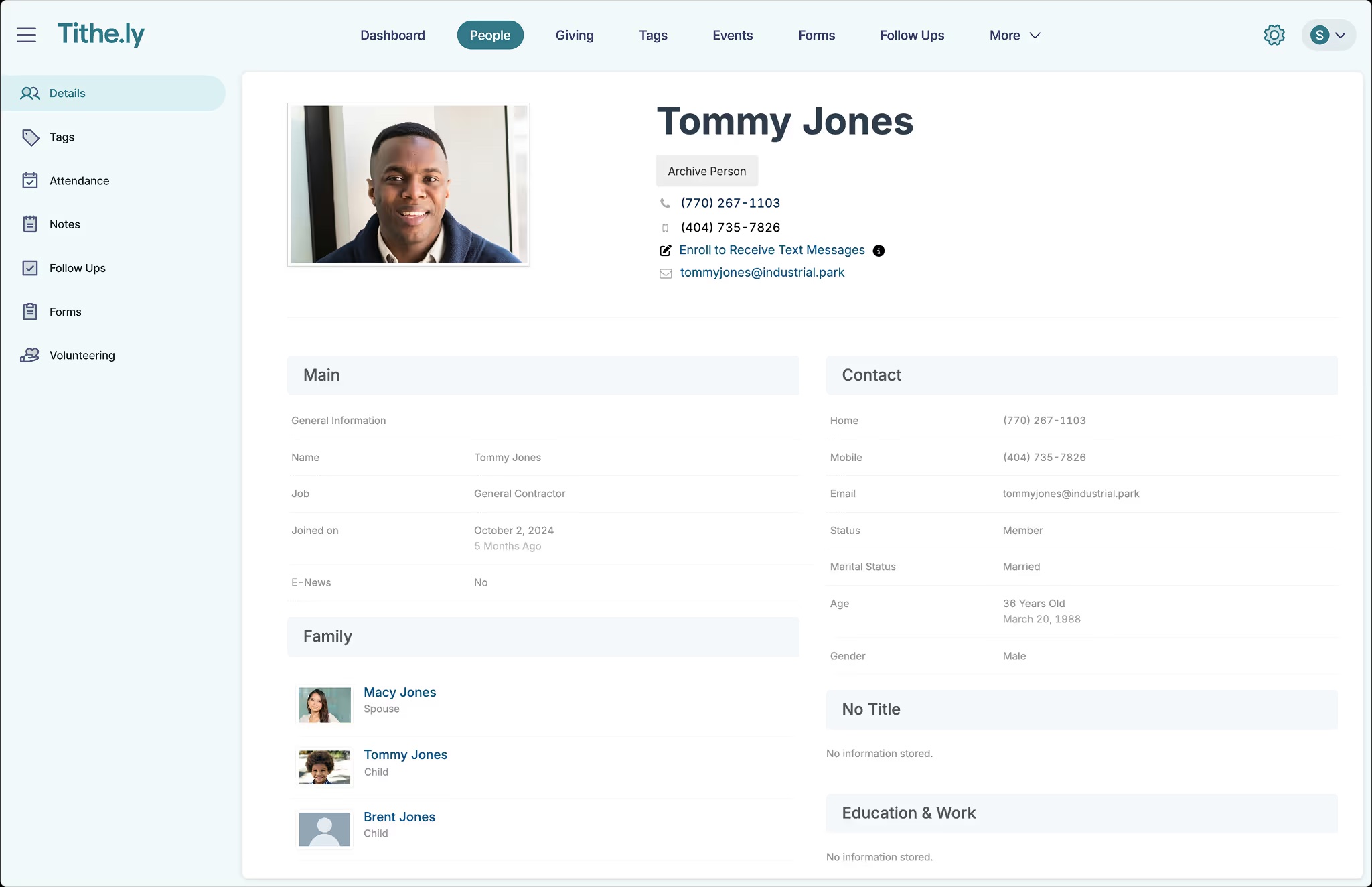
- Free giving plan with no monthly fee genuinely removes the financial barrier for churches launching online giving.
- All-Access bundle is the cheapest path to website + app + giving + ChMS in a single bill.
- Sites builder produces clean, mobile-first church websites without needing a developer.
- Active acquisition strategy (Breeze, Elvanto) means the platform footprint keeps expanding.
- Migrating donors from another platform is smooth — Tithe.ly will actively help move recurring gifts.
- Multiple acquired products under one brand creates a confusing UX; ChMS, Sites, and Giving all feel like different apps.
- Customer support has slipped in 2024-2025 reviews; ticket times stretched to days during peak season.
- Reporting is functional but can't match Pushpay or Planning Center for cohort analysis.
- Volunteer scheduling exists but most churches still use Planning Center Services alongside it.
- Roadmap priorities are unclear — it's hard to tell which acquired product is actually getting investment.
Tithe.ly churches who want a clean mobile-first website inside the same monthly bill as giving and ChMS.
You don't use Tithe.ly Giving or ChMS — Sites alone isn't differentiated enough to choose over Squarespace.
Tithe.ly's bet on free giving was the right one, and it's how they got footholds in tens of thousands of churches. The harder bet is whether they can stitch Breeze, Elvanto, Sites, and the original Giving app into something that feels like one product. Right now it doesn't — it feels like a holding company. For a 150-person church just trying to take their first online gift, that doesn't matter and you should sign up today. For a 600-person church evaluating an all-in-one, the seams are visible enough that we'd seriously look at Planning Center plus a separate website tool instead.
2. Subsplash
Custom church mobile apps and media platform that has grown into a full giving and ChMS suite.
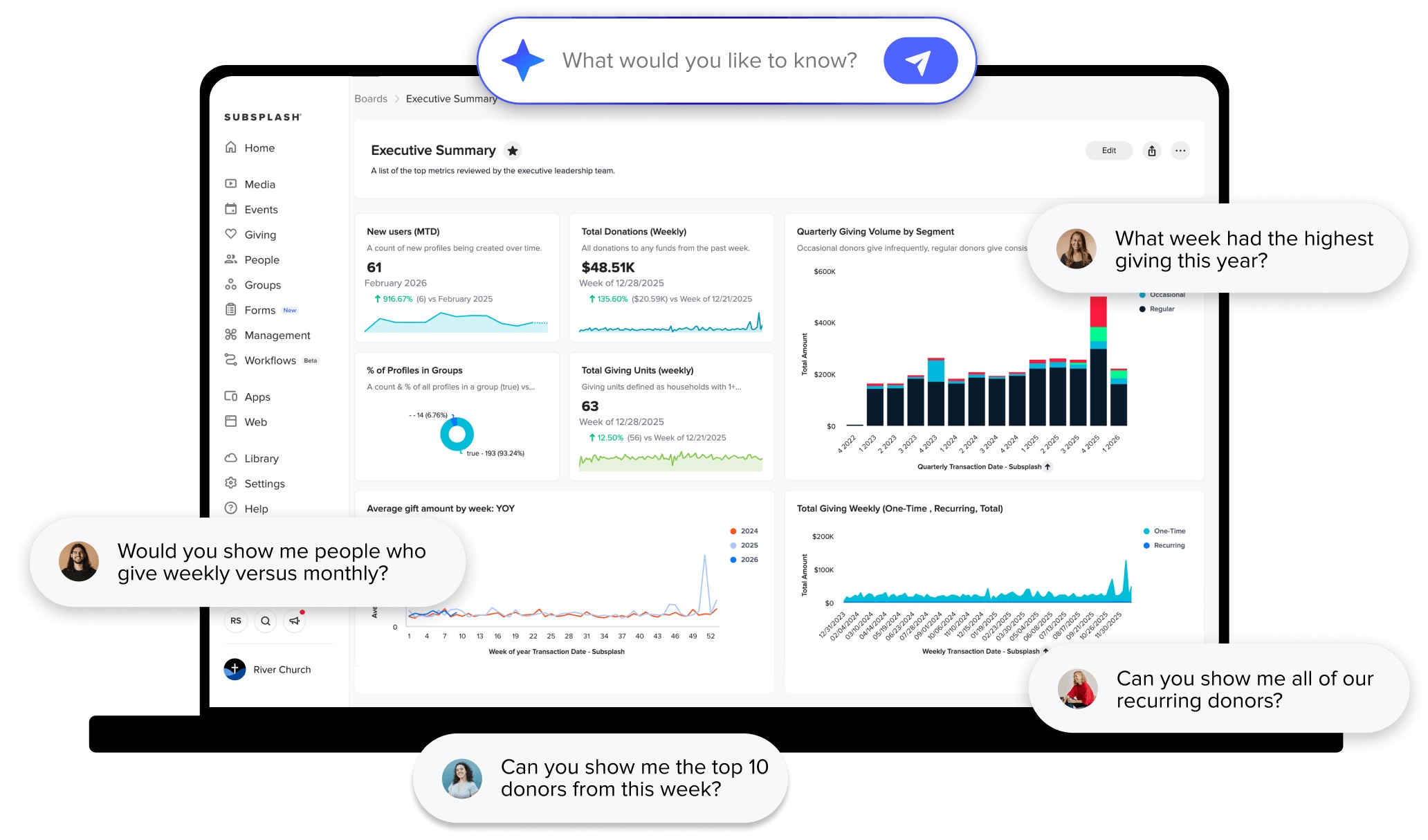
- App quality is genuinely high — fast launch times, polished sermon player, native feel on iOS and Android.
- Bundled live streaming and media hosting saves churches from paying separately for Resi or Vimeo OTT.
- Custom-branded app distribution under your church's name on the app stores is included, not an upcharge.
- Subsplash One bundle is one of the few real all-in-ones if you want app, web, giving, and CRM from one vendor.
- Customer success is responsive and includes app store submission/maintenance, which removes a real burden.
- Pricing is sales-gated and aggressive; sticker shock is the most common complaint in third-party reviews.
- Multi-year contracts are standard and difficult to exit early.
- ChMS module is the weakest part of the suite and feels bolted on compared to Planning Center or Breeze.
- Volunteer scheduling is essentially absent — churches keep Planning Center Services alongside.
- Renewal pricing tends to climb meaningfully year over year unless you actively renegotiate.
Subsplash customers whose website needs to share content with the branded mobile app and livestream library.
You're not committed to the Subsplash suite — the website alone doesn't justify the bundled pricing.
Subsplash is what you buy when you want your church to feel like a media company. The app is excellent and it's the reason most customers stay. The rest of the suite ranges from competent to noticeably weaker than category leaders, and the pricing model is firmly enterprise — expect a sales call, expect a contract, and expect renewal bumps. We'd recommend it without reservation to churches whose digital strategy is media-heavy. For churches whose primary problem is 'we need a database that works,' there are better and cheaper answers.
3. Elexio
Mid-market ChMS and website platform from Ministry Brands, with a long Anabaptist and evangelical customer base.
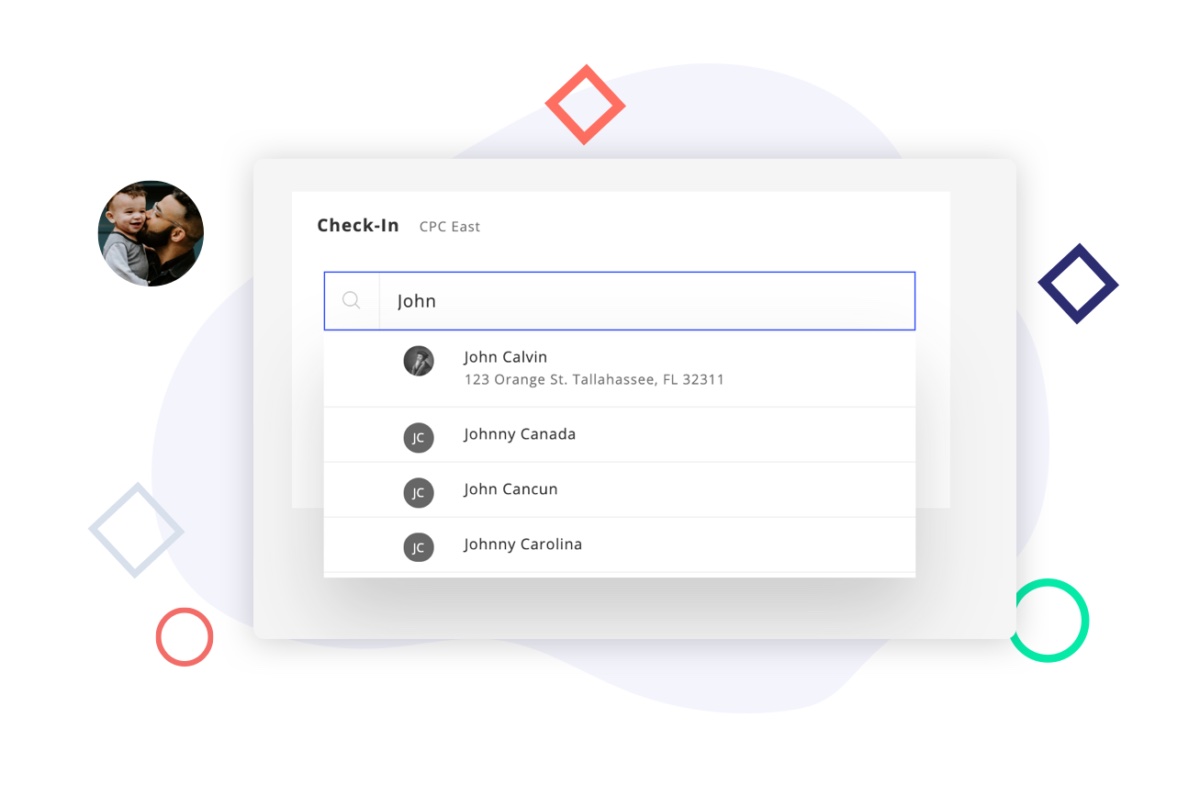
- Bundled ChMS plus website builder is a real time-saver for mid-size churches that want one vendor.
- Strong child check-in workflows with label printing, often cited in third-party reviews.
- Stable, established customer base means feature gaps tend to be filed and eventually addressed.
- Reporting on giving and attendance is reasonable for the price tier.
- Ministry Brands ecosystem provides a path to background checks, accounting, and other adjacent products.
- Pricing is sales-gated; you have to ask to know what it costs.
- UI is dated and inconsistent across the ChMS and web modules.
- Volunteer scheduling is far behind Planning Center.
- Roadmap velocity has slowed since Ministry Brands rolled it into a portfolio of similar products.
- Migrating off is moderately painful given how many other Ministry Brands products it tends to be entangled with.
Mid-size traditional churches in the Ministry Brands ecosystem who want one vendor for ChMS and a basic CMS.
Design polish is high on your list; Elexio Web templates feel a generation behind modern church sites.
Elexio is the kind of tool that makes sense if your church already lives in the Ministry Brands ecosystem. The ChMS is competent, the website module saves you from a separate vendor, and support is generally responsive. Our concern, like with most Ministry Brands properties, is the pace of investment — it's hard to escape the feeling this is a portfolio asset being maintained rather than a product being pushed forward. Fine for stable churches that don't need bleeding-edge features. Probably not where you'd choose to start in 2026 if you were greenfield.
4. Pushpay (with Church Community Builder)
Enterprise-grade giving and ChMS suite aimed squarely at large multi-campus churches.
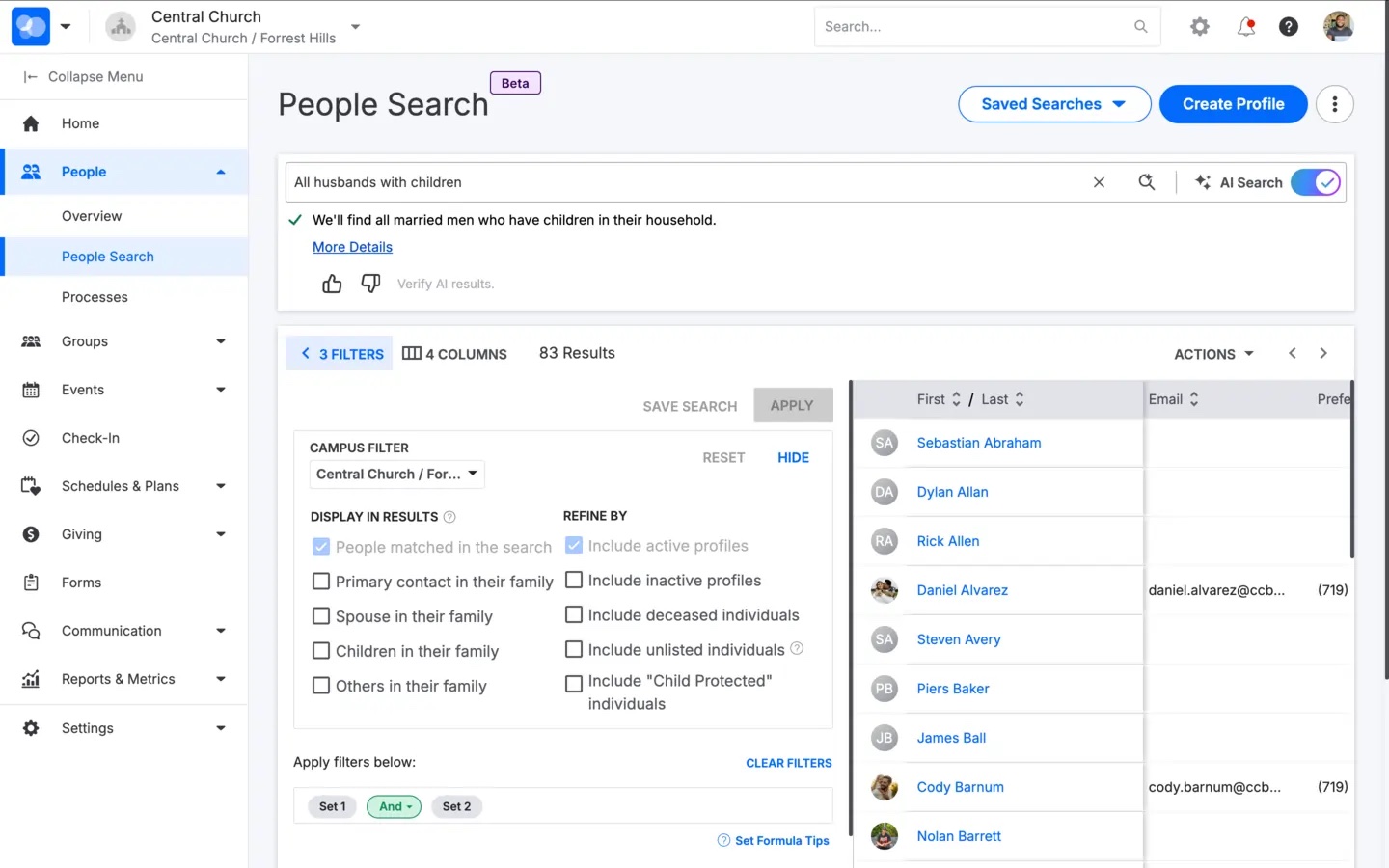
- Donor experience is genuinely best-in-class: text-to-give, recurring setup, and digital wallet flows have very low friction.
- Branded app product is mature and used by many of the largest churches in the US, with solid sermon and live-stream playback.
- Reporting on giving is deep — donor retention cohorts, lapsed-giver flagging, and pledge tracking are first-class.
- Account management is high-touch; your CSM actually knows your campus structure and giving patterns.
- CCB integration lets you tie giving back to small-group attendance and discipleship paths in one record.
- Pricing is opaque and quote-only; smaller churches routinely get pushed out of the funnel by sales gating.
- Transaction fees are higher than Stripe-direct competitors like Tithe.ly or Planning Center Giving.
- Contracts are typically annual and often multi-year, with auto-renewal clauses that catch staff off guard.
- CCB feels like the older product in the pairing; UI hasn't kept pace with Planning Center or newer entrants.
- Switching off Pushpay is meaningfully painful — donor data export and recurring-gift migration both require manual coordination.
Large churches on Pushpay/CCB who add a website module to consolidate their digital presence under one CSM relationship.
Your only need is a website — you'll pay enterprise pricing for a feature that costs $20/month elsewhere.
Pushpay is the enterprise pick. If you're a 5,000-person multi-site church, you almost certainly already use it or have considered it, and the reasons are real: the donor app converts, the CSM relationship matters when you're processing seven figures of giving annually, and the CCB pairing covers most of what you need. The catch is that you pay for that polish, and the contract structure makes it hard to leave. We'd push back hard on any church under 500 people who's been pitched this — you're paying for a tier of service you won't use.
5. Rock RMS
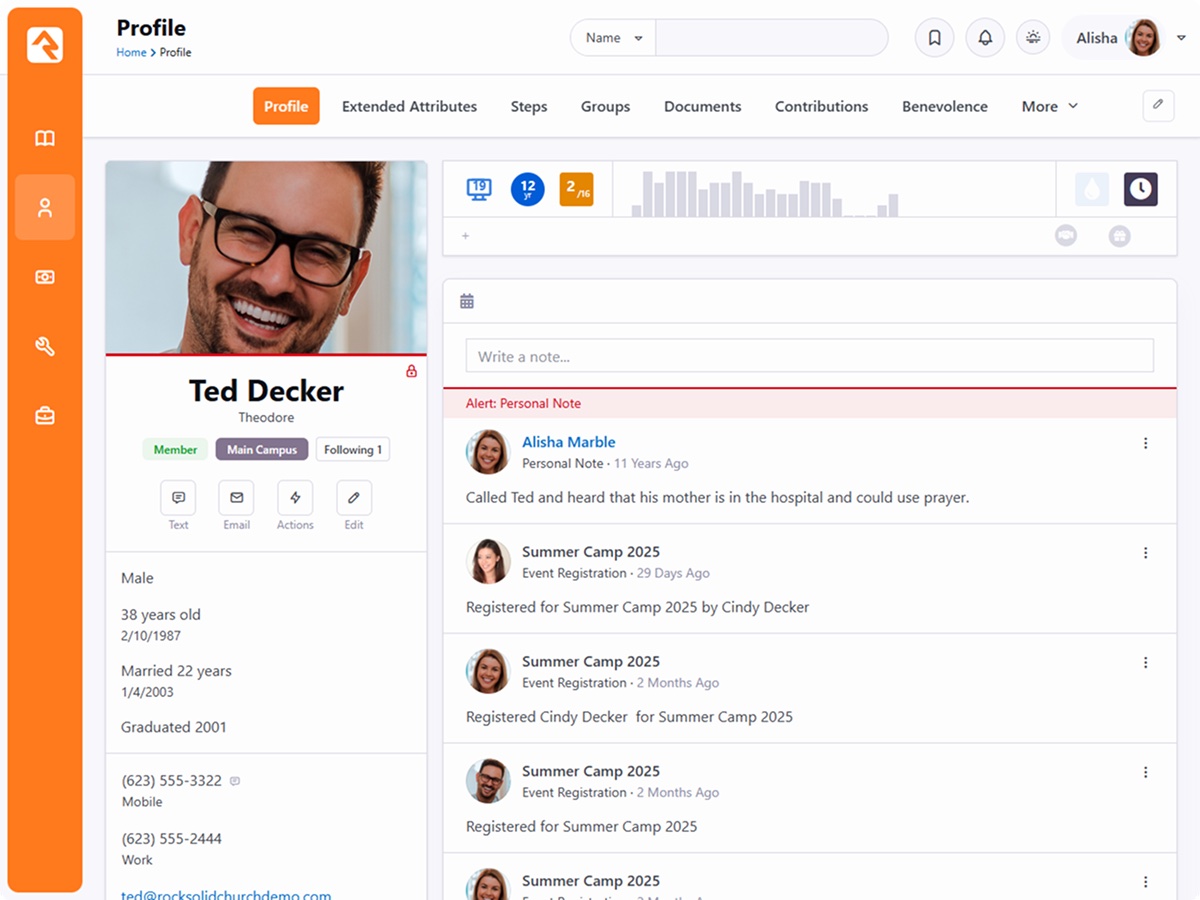
Free, open-source enterprise ChMS originally built for Central Christian Church and now used by megachurches.
- Genuinely free and open source — no per-record pricing, no contract, no vendor lock-in.
- The workflow and rules engine is the most powerful in the entire ChMS market by a wide margin.
- Includes an integrated CMS, so your website and ChMS share one user database without sync hacks.
- Built by and for very large churches, so the data model handles multi-site, multi-campus, and complex permissioning.
- Active community of partners who provide hosting, customization, and consulting at fair rates.
- Real implementation cost is not zero — most churches spend $5-20k on a partner to deploy and customize it.
- Requires a developer-adjacent staff member or budget for one; this is not self-serve.
- Documentation is improving but assumes more technical comfort than commercial ChMS docs.
- Mobile experience trails commercial competitors unless you pay for the optional mobile shell.
- Roadmap is community-driven, so feature priorities won't always match yours.
Multi-site churches with internal IT capacity who want their website and ChMS to share one user database and CMS.
You don't have a developer; Rock's CMS is genuinely capable but assumes someone on staff can build with it.
Rock is the most interesting tool in this list because it's the only one whose ceiling is set by your team, not the vendor. We've seen 10,000-attendance churches run operations on Rock that would cost $50k/year on commercial alternatives. We've also seen 300-person churches drown in it because they didn't have the technical capacity. The right answer isn't 'is Rock good' — it's 'do we have a developer.' If yes, take it seriously, especially if your data is already a mess in a commercial tool. If no, choose something else and be honest about why.
Verdict
If you're starting from zero and just want a church website that looks good and doesn't fight you, use Squarespace. We're serious. The Squarespace template library has plenty of church-appropriate designs, the editor is the best in the category, and you'll spend $200 a year instead of $2,000. Embed your ChMS giving form and your livestream and call it done.
If you're already a Tithe.ly customer and want website plus giving from one bill, the Tithe.ly Sites builder is the cleanest pure-church option and the All-Access bundle is the cheapest end-to-end suite anyone offers¹. If you're a Subsplash customer, the website builder is competent and the integration with the app and media library is genuinely tight².
What we'd push back on: paying $200-400 a month for a Pushpay⁴ or Subsplash bundle just to get a website builder. At that price you're better off with Squarespace plus your existing tools.
Sources
- Tithe.ly Sites and All-Access bundle, accessed 2026-05
- Subsplash product and website builder pages, accessed 2026-05
- Elexio Web and Community product pages, accessed 2026-05
- Pushpay product and Church Community Builder pages, accessed 2026-05
- Wisefig internal testing notes (hands-on across editor and embed flows)