The 5 best free church management software in 2026
By Sankalp Jonna · Last reviewed April 2026
Free church management software is the small set of ChMS tools with genuinely free tiers (no time limit, no expiring trial) that cover the basic member database, giving, and check-in needs of an under-100-attendee church, plus the open-source projects whose license is free but deployment is not. Most software marketed as 'free church management' is actually a 14-day trial that nobody calls a trial. The pattern is so common that we'd estimate 80% of churches searching for free ChMS end up on a sales call within a week, paying $50-100 a month within a month. The tools below are the exceptions: ones with genuinely free tiers, real free pricing, or open-source code that costs nothing to license.
The honest framing is that free at scale is rare in this category. A ChMS is a real piece of software, servers, storage, support, compliance, and the unit economics of giving it away to a 500-person church don't work for most vendors. The tools that pull it off either limit by people count (ChurchTrac, Planning Center per-product), make money on transaction fees instead of monthly fees (Tithe.ly Giving), or are open-source projects funded by partners and consulting (Rock RMS).
We tested five platforms hands-on against the question 'what does the free version actually let me do?'⁵ Writing is AI-assisted from raw notes. Rankings are ours.
What makes a great free church management software?
Here’s what we look for when we evaluate this category. Every tool below was scored against the same criteria.
Whether the free tier is permanent or a thinly disguised trial that expires in 14-30 days.
What caps apply on people count, sends, transactions, or features at the no-cost level.
How many of the core ChMS functions — people, giving, check-in, attendance — are usable on the free tier.
What happens when you outgrow free, and how reasonable the next-tier pricing is.
Whether 'free' actually means free, or whether hosting, consulting, and integrations make the all-in cost meaningful.
Comparison at a glance
| Tool | Score | Best for | Pricing | Free plan | Standout |
|---|---|---|---|---|---|
| ChurchTrac | 8.1 | Small churches under 100 people who need a real free ChMS with accounting, giving, and check-in included indefinitely. | Free tier available | ✓ | It's the only sub-$30/month tool that includes real fund accounting alongside ChMS and giving. |
| Planning Center | 9.3 | Small churches who want the polish of a top-tier ChMS at zero cost, with per-product free tiers across most modules. | Free tier available | ✓ | Services is the best worship-planning and volunteer-scheduling tool in the entire category, full stop. |
| Tithe.ly | 8.4 | Churches who want online giving live this week with no monthly fee, paying only per-transaction processing. | Free tier available | ✓ | Free giving plan with no monthly fee is the most aggressive pricing in the category by a wide margin. |
| Rock RMS | 8.5 | Multi-site churches with a developer on staff who want enterprise-grade ChMS without licensing costs. | Free tier available | ✓ | A workflow engine and data model that can be molded to fit any church operation, with no licensing ceiling. |
| Givelify | 7.6 | Small churches who only need a giving rail at zero monthly cost, especially in denominations where Givelify is already on members' phones. | Free tier available | ✓ | The pre-installed donor base — millions of givers already have the Givelify app — is a genuine network effect. |
1. ChurchTrac
Quietly capable, low-cost ChMS with built-in accounting that punches well above its price.
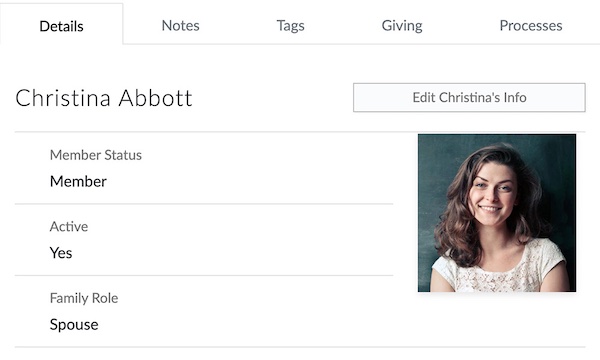
- Pricing is unbeatable for what you get — full ChMS plus fund accounting for under $25/month at most church sizes.
- Genuine built-in fund accounting at the small-church price point is essentially unique to ChurchTrac.
- Free plan is real and not a 14-day trial; small congregations can run it indefinitely.
- Owner-operator company with real responsiveness on email support, not a tiered ticket queue.
- Data is exportable and ownership is clear — no lock-in beyond your monthly subscription.
- UI is utilitarian; it works, but it doesn't have the polish of Breeze or Planning Center.
- Mobile experience is web-based primarily; the dedicated mobile app is functional but limited.
- Volunteer scheduling is basic and won't satisfy a church with a serious worship rotation.
- Brand recognition is low, so peer learning and tutorials are thinner than for category leaders.
- Integration ecosystem is shallow; if you live in Zapier, you'll feel constrained.
Small churches under 100 people who need a real free ChMS with accounting, giving, and check-in included indefinitely.
You need polished UI or you'll cross 100 active people in the next year — the upgrade is cheap but not free.
ChurchTrac is a sleeper. It doesn't have the marketing budget of Tithe.ly or the polish of Planning Center, but for small churches that genuinely need fund accounting alongside the database, nothing else at this price point exists. We've seen it run perfectly well at 400-person churches with a part-time bookkeeper. The honest caveat is that it looks and feels like the work of a small team — because it is — and if your staff is younger or comes from polished SaaS tools, the UI will feel dated. Trade design for capability and money saved, and you'll come out ahead.
2. Planning Center
The modular industry standard for service planning, volunteer scheduling, and people management.
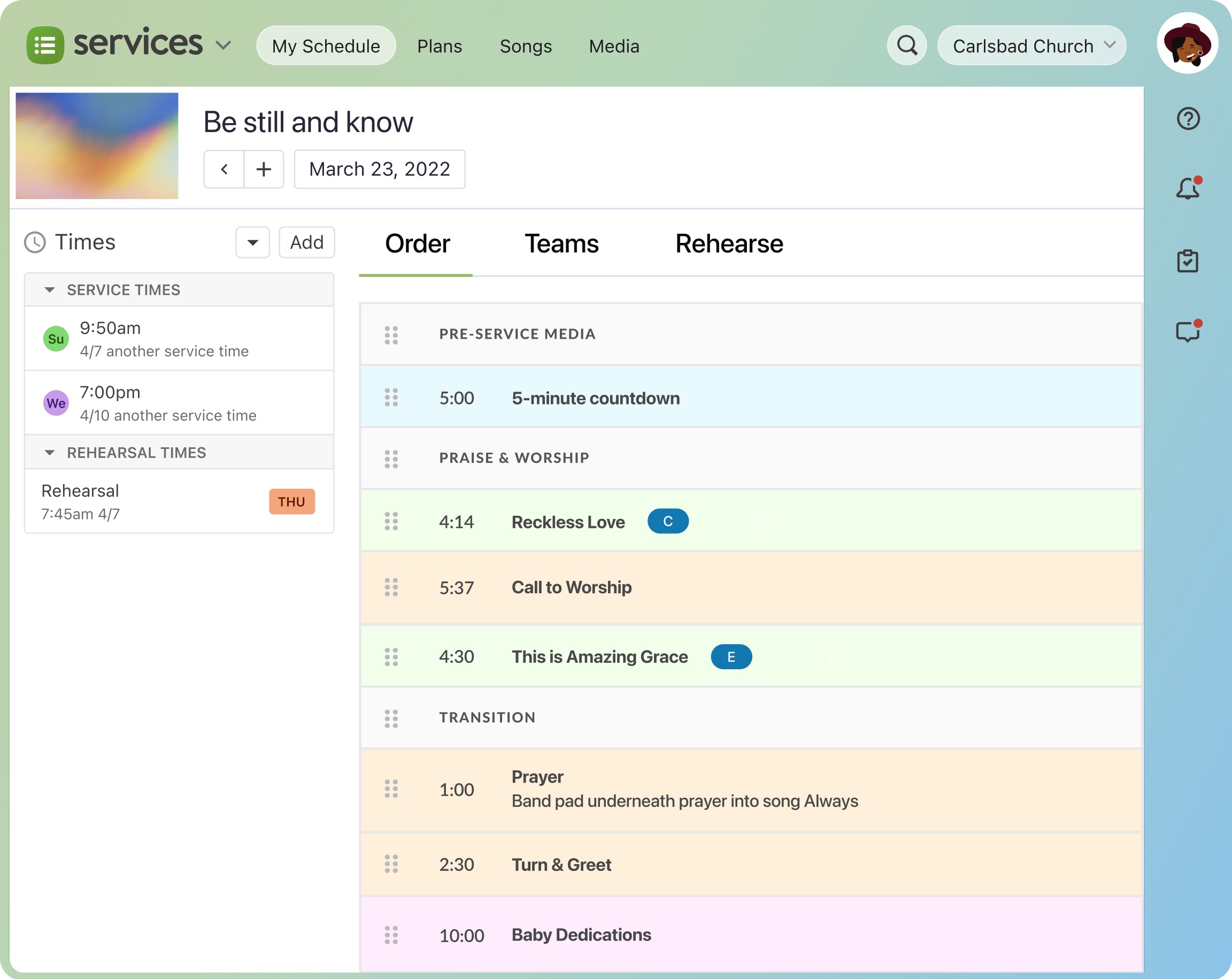
- Modular pricing means you only pay for the products you actually use, instead of bundling features you'll never touch.
- Services module is genuinely the gold standard for worship planning, with chord charts, rehearsal recordings, and conflict-aware scheduling.
- Church Center mobile app gives members one polished entry point for giving, groups, events, and check-in.
- Strong API and webhook coverage make it the easiest ChMS to integrate with custom tooling or third-party reporting.
- Onboarding is self-serve and well-documented; most churches go live without a paid implementation contract.
- Costs add up fast once you adopt 4-5 modules; a 500-person church can easily spend $250+/month before processing fees.
- No native general-ledger accounting, so finance teams still need QuickBooks or another system alongside it.
- Reporting across modules is inconsistent; some products have rich filters, others feel like an afterthought.
- The product suite still feels like separate apps stitched together, which means navigating between Services, People, and Giving has friction.
- No website builder, so churches needing a CMS have to pair it with Squarespace, Subsplash, or similar.
Small churches who want the polish of a top-tier ChMS at zero cost, with per-product free tiers across most modules.
You're already over the free caps on People (250 records) or Services (5 plans per month) and don't want to upgrade.
Planning Center has earned its reputation. Services in particular is the kind of product that ruins you for competitors — once a worship pastor has scheduled bands, sent rehearsal mp3s, and tracked declines from a phone, going back to spreadsheets feels archaic. The trade-off is that PCO has stayed deliberately narrow: no accounting, no website builder, no live streaming. That focus is the reason each module is so good, but it also means you'll be writing checks to two or three other vendors. For churches over ~150 people with a real worship rotation, this is the safe pick. Smaller churches should look at Breeze first.
3. Tithe.ly
Aggressively priced giving platform with a growing ChMS, app, and website stack underneath it.
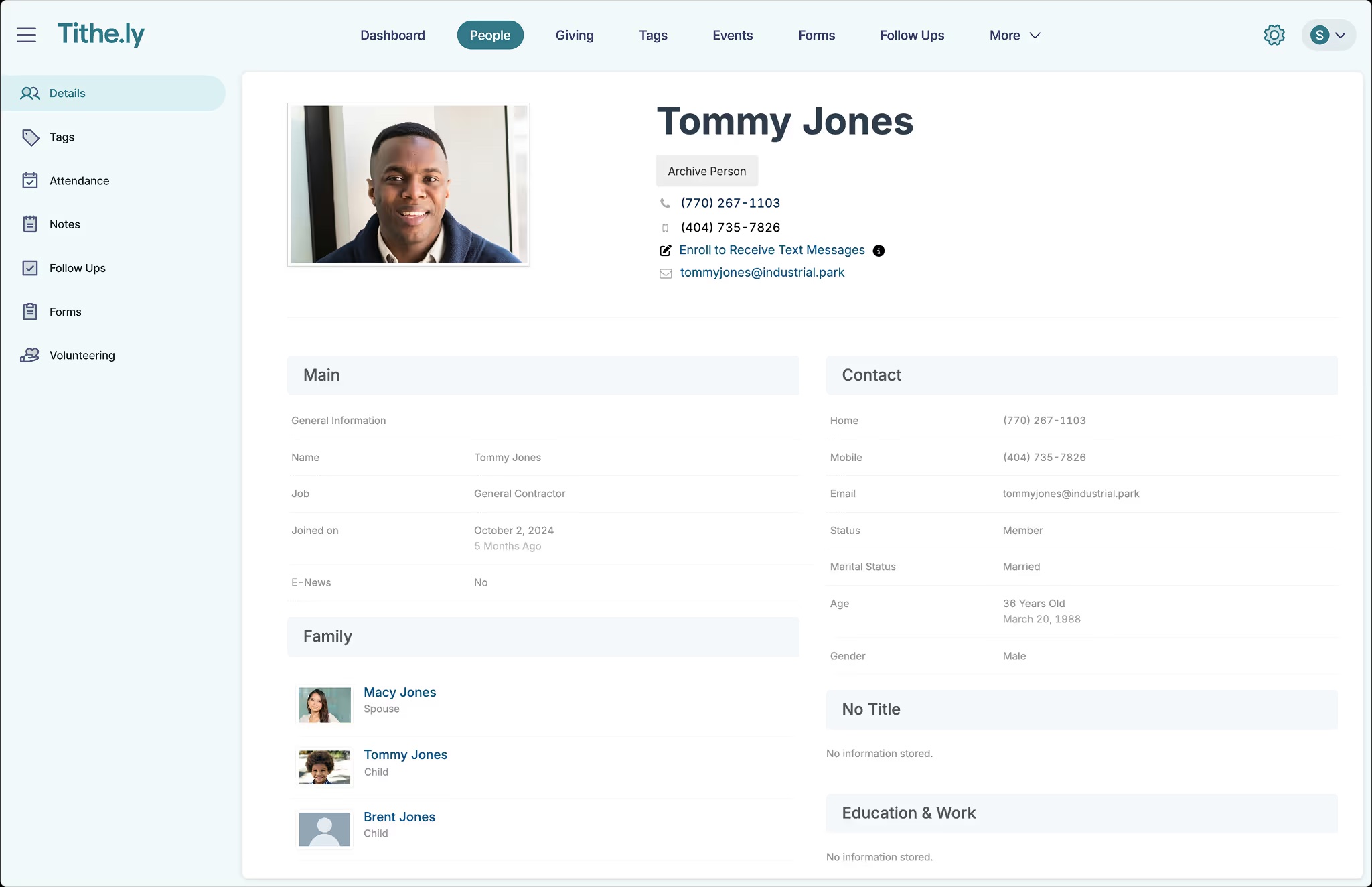
- Free giving plan with no monthly fee genuinely removes the financial barrier for churches launching online giving.
- All-Access bundle is the cheapest path to website + app + giving + ChMS in a single bill.
- Sites builder produces clean, mobile-first church websites without needing a developer.
- Active acquisition strategy (Breeze, Elvanto) means the platform footprint keeps expanding.
- Migrating donors from another platform is smooth — Tithe.ly will actively help move recurring gifts.
- Multiple acquired products under one brand creates a confusing UX; ChMS, Sites, and Giving all feel like different apps.
- Customer support has slipped in 2024-2025 reviews; ticket times stretched to days during peak season.
- Reporting is functional but can't match Pushpay or Planning Center for cohort analysis.
- Volunteer scheduling exists but most churches still use Planning Center Services alongside it.
- Roadmap priorities are unclear — it's hard to tell which acquired product is actually getting investment.
Churches who want online giving live this week with no monthly fee, paying only per-transaction processing.
You want a full ChMS for free — Tithe.ly's free tier is giving-only, and the ChMS module costs $49/month.
Tithe.ly's bet on free giving was the right one, and it's how they got footholds in tens of thousands of churches. The harder bet is whether they can stitch Breeze, Elvanto, Sites, and the original Giving app into something that feels like one product. Right now it doesn't — it feels like a holding company. For a 150-person church just trying to take their first online gift, that doesn't matter and you should sign up today. For a 600-person church evaluating an all-in-one, the seams are visible enough that we'd seriously look at Planning Center plus a separate website tool instead.
4. Rock RMS
Free, open-source enterprise ChMS originally built for Central Christian Church and now used by megachurches.
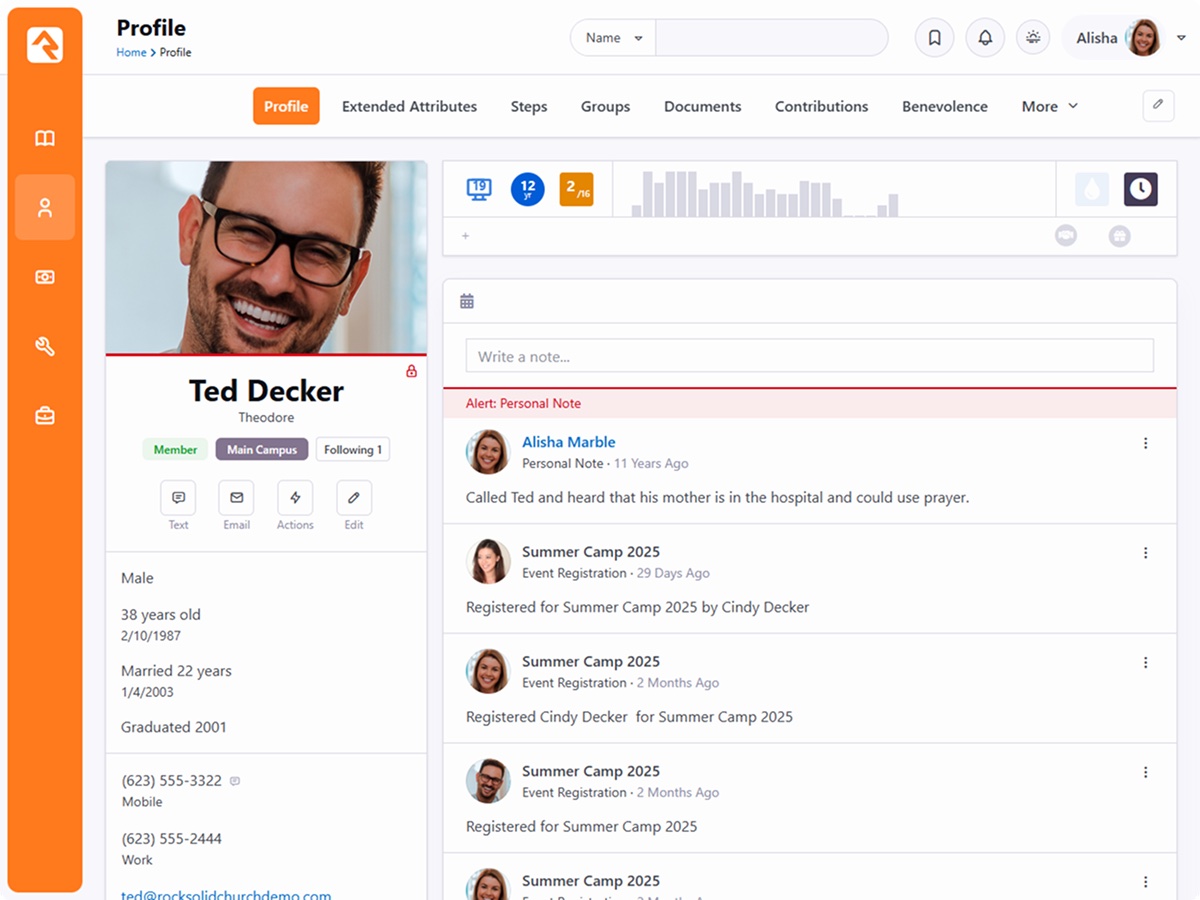
- Genuinely free and open source — no per-record pricing, no contract, no vendor lock-in.
- The workflow and rules engine is the most powerful in the entire ChMS market by a wide margin.
- Includes an integrated CMS, so your website and ChMS share one user database without sync hacks.
- Built by and for very large churches, so the data model handles multi-site, multi-campus, and complex permissioning.
- Active community of partners who provide hosting, customization, and consulting at fair rates.
- Real implementation cost is not zero — most churches spend $5-20k on a partner to deploy and customize it.
- Requires a developer-adjacent staff member or budget for one; this is not self-serve.
- Documentation is improving but assumes more technical comfort than commercial ChMS docs.
- Mobile experience trails commercial competitors unless you pay for the optional mobile shell.
- Roadmap is community-driven, so feature priorities won't always match yours.
Multi-site churches with a developer on staff who want enterprise-grade ChMS without licensing costs.
You don't have a developer or budget for one — Rock's $0 license is misleading without implementation capacity.
Rock is the most interesting tool in this list because it's the only one whose ceiling is set by your team, not the vendor. We've seen 10,000-attendance churches run operations on Rock that would cost $50k/year on commercial alternatives. We've also seen 300-person churches drown in it because they didn't have the technical capacity. The right answer isn't 'is Rock good' — it's 'do we have a developer.' If yes, take it seriously, especially if your data is already a mess in a commercial tool. If no, choose something else and be honest about why.
5. Givelify
Donor-app-first giving platform that prioritizes ease of one-time mobile gifts over deep ChMS reporting.
- The donor app has unusually high install volume across Black church and historically Black denomination contexts.
- Donor experience is genuinely two taps to give; setup friction for new givers is among the lowest in the category.
- No monthly fee means even tiny churches can adopt it without a budget conversation.
- Onboarding for the church side is fast — most accounts go live the same day.
- Strong brand presence in specific denominational communities (AME, Pentecostal, Baptist) creates donor familiarity.
- Transaction fees are flat at 2.9% + $0.30 with no break for ACH or high volume — expensive at scale.
- It's a giving app only, not a ChMS; you'll need a separate tool for membership and check-in.
- Reporting is shallow compared to Pushpay or Planning Center Giving.
- Limited donor segmentation, lapsed-giver alerts, or pledge tracking.
- Branded-app experience is Givelify's app, not your church's; some staff feel that dilutes their brand.
Small churches who only need a giving rail at zero monthly cost, especially in denominations where Givelify is already on members' phones.
You need church management features beyond giving — Givelify is intentionally giving-only.
Givelify is one of the few church tools whose primary moat is consumer-side network effects. In specific denominational communities — particularly Black churches — the app is already on members' phones, and that genuinely matters. The giving experience is excellent for one-time gifts. Where it falls short is anything beyond giving: there's no ChMS, reporting is thin, and the 2.9% fee at higher volumes adds up versus Stripe-direct competitors. Use it as a giving rail, not a platform.
Verdict
ChurchTrac is the best genuinely free ChMS for the long tail of small churches¹. The free tier covers up to 100 people, includes fund accounting, giving, attendance, and check-in, and runs indefinitely with no time limit. For a 60-person church plant, this is the answer. Even at 100+ people, the paid tier is $9-24 a month, which is closer to free than to anything else.
Planning Center is the right pick if you want polish over breadth in the free tier². Each product has a free tier with caps; a small church can run Services, People, Giving, and Check-Ins for free up to per-product limits, and the experience matches the paid tier. The catch is you'll outgrow the free caps faster than you'd think.
Rock RMS is the wildcard⁴. It's genuinely free open-source software used by megachurches, but it requires a developer or a partner-hosting setup that costs $200-600 a month all-in. The 'free' here is the license, not the deployment. For churches with internal IT capacity, it's the most powerful free option in the category by a wide margin.
Sources
- ChurchTrac free plan and pricing pages, accessed 2026-05
- Planning Center per-product free tiers, accessed 2026-05
- Tithe.ly pricing and free giving plan, accessed 2026-05
- Rock RMS open-source community license and partner-hosting model, accessed 2026-05
- Wisefig internal testing notes (hands-on at free-tier limits)