Pushpay review: is it worth it in 2026?
By Sankalp Jonna · Last reviewed April 2026
Pushpay (with Church Community Builder)
Enterprise-grade giving and ChMS suite aimed squarely at large multi-campus churches.
Visit Pushpay (with Church Community Builder) ↗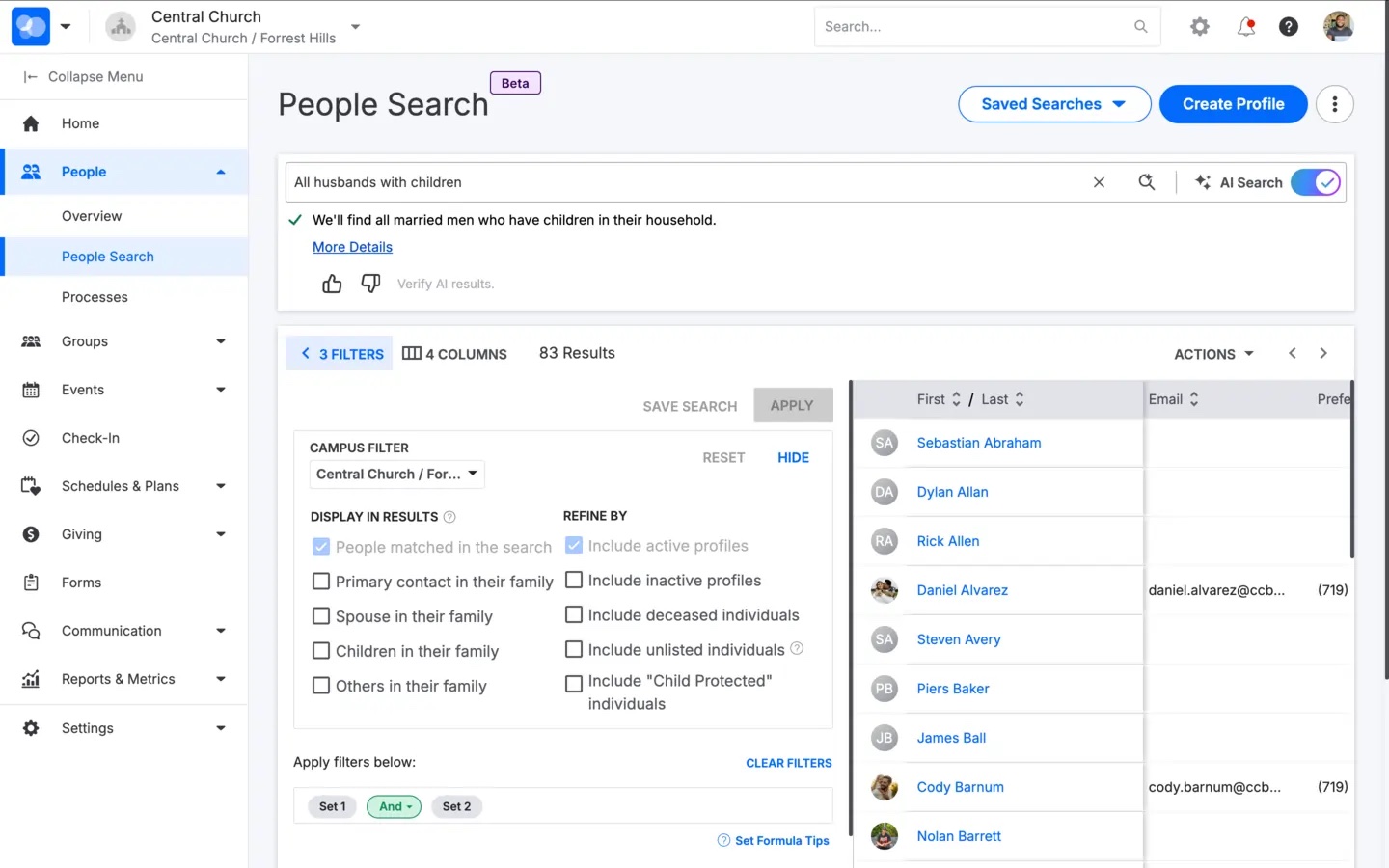
Pushpay is the giving platform you end up on when your church gets large enough that someone other than the senior pastor handles the donation system. The donor app is genuinely the best in the category, the account management is high-touch, and the CCB pairing covers most of what a megachurch needs.² It is also the platform whose price you cannot find on the website, whose contracts are typically multi-year, and whose floor cost prices out almost every church under 1,000 attendance.¹
We think Pushpay earns its position at the top of the enterprise tier. We also think a non-trivial number of mid-size churches end up there because of a sales call that should never have been booked. This review is written for the second group as much as the first.
What it is
Pushpay is a publicly-listed church and nonprofit giving platform founded in 2011 in Auckland, New Zealand and now headquartered in Redmond, Washington for its US operations.² The company has spent the last decade aggressively bundling: it acquired Church Community Builder (CCB) for ChMS in 2018, paired its giving rail with a custom branded mobile app product, and now sells the bundle as a single enterprise contract.²
The donor app is the part the marketing leads with, and the part most churches actually buy. It does text-to-give, recurring setup, digital wallet flows (Apple Pay, Google Pay), and one-tap repeat giving. The conversion math is real — Pushpay's published donor retention numbers are higher than most independent processors, and at scale that difference matters.
CCB is the church management half. It handles membership, groups, attendance, check-in, and basic volunteer scheduling. CCB is the older product in the pairing — it's been around since 1999 — and it shows. The data model is mature and battle-tested for multi-site, but the UI hasn't kept pace with Planning Center or newer entrants. Pushpay's roadmap on CCB has been steady but not aggressive, and most CCB customers we talk to are content rather than excited.
Pricing requires a sales call. There is no public pricing page, no self-serve signup, and no short-term contract option. You'll book a sales call, walk through your campus structure and giving volume, and receive a custom quote that includes a monthly platform fee plus per-transaction processing.
Who it’s for
Pushpay makes sense for churches above roughly 1,500 weekly attendance, especially multi-site churches processing seven figures of giving annually. At that scale, the donor experience matters because small conversion lifts compound into real money, the CSM relationship matters because you have someone on staff who actually has time to use it, and the CCB pairing reduces vendor count.
It does not make sense for churches under 500 people. The contract structure, sales-led pricing, and floor cost are all designed for organizations that think in terms of CFO reviews and multi-year procurement, not church admins juggling QuickBooks. We've seen 300-person churches signed onto multi-year Pushpay contracts and regret it within twelve months — not because the product is bad, but because they're paying for a tier of service they'll never use. If that's you, Tithe.ly or Planning Center Giving will give you 90% of the donor experience at 10% of the cost.
Key features
The flagship product. One-tap recurring giving, Apple Pay and Google Pay support, text-to-give, and donor-side recurring management. Conversion rates on first-time gifts are among the best in the category.
A separate add-on that gives your church its own listed app on iOS and Android with sermons, live streaming, giving, and groups. Common at megachurches; pricing is on top of the giving and CCB lines.
The ChMS half of the bundle. Handles membership, groups, attendance, check-in, and basic scheduling. Mature data model, dated UI; Planning Center is a better experience but CCB integrates more tightly with Pushpay Giving.
Genuinely first-class. Track new-giver retention, lapsed-giver alerts, pledge progress, and giving cohorts over multi-year windows. Most other platforms force CSV exports for this kind of analysis.
Not a feature, but a fact about the product. You will book a sales call. The CSM will quote based on your campus structure and giving volume. Contracts are typically annual or multi-year with auto-renewal.
A real human who knows your campus structure, giving patterns, and seasonal flows. At megachurch scale this is genuinely useful; at smaller scale it can feel like overhead.
Pushpay onboarding is a paid, guided process — not self-serve. For multi-site churches with complex campus permissions and donor history migration, that's the right model. For a 200-person church, it's overkill.
Pros & cons
- Donor experience is genuinely best-in-class: text-to-give, recurring setup, and digital wallet flows have very low friction.
- Branded app product is mature and used by many of the largest churches in the US, with solid sermon and live-stream playback.
- Reporting on giving is deep — donor retention cohorts, lapsed-giver flagging, and pledge tracking are first-class.
- Account management is high-touch; your CSM actually knows your campus structure and giving patterns.
- CCB integration lets you tie giving back to small-group attendance and discipleship paths in one record.
- Pricing is opaque and quote-only; smaller churches routinely get pushed out of the funnel by sales gating.
- Transaction fees are higher than Stripe-direct competitors like Tithe.ly or Planning Center Giving.
- Contracts are typically annual and often multi-year, with auto-renewal clauses that catch staff off guard.
- CCB feels like the older product in the pairing; UI hasn't kept pace with Planning Center or newer entrants.
- Switching off Pushpay is meaningfully painful — donor data export and recurring-gift migration both require manual coordination.
Pricing
Pushpay does not publish pricing publicly.¹ Every account is quoted, and the sales call is part of the sales process. From conversations with churches and from third-party reviews we've read, the entry point typically lands around $400-600/month for a single-campus mid-size church on the giving-only product, and $800-2,000+/month for the full bundle (Giving plus CCB plus custom app) at multi-site scale.³ Per-transaction processing typically lands around 2.5-3.0% on cards plus $0.30, with negotiated rates for high-volume accounts.
Contracts are usually annual, often multi-year, and include auto-renewal language that has caught more than one church admin off guard. We'd push back hard on signing anything longer than 12 months on a first contract, and we'd insist on a written exit clause for donor data export. The pricing isn't unreasonable for what you get at megachurch scale; it is wildly unreasonable for a 300-person church being pitched into the funnel.
| Plan | Price | Includes |
|---|---|---|
| Giving | Contact sales | Quote-based; typical accounts pay a monthly platform fee plus per-transaction processing. |
| Giving + ChMS (CCB) | Contact sales | Bundled with Church Community Builder for full church management; quote-based. |
| Custom App | Contact sales | Branded mobile app add-on with sermons, giving, and groups; quote-based. |
Transaction fees: Tiered, generally ~2.5-3.0% + $0.30; lower for high-volume churches
Alternatives
The modular industry standard for service planning, volunteer scheduling, and people management.
Aggressively priced giving platform with a growing ChMS, app, and website stack underneath it.
Custom church mobile apps and media platform that has grown into a full giving and ChMS suite.
Verdict
We'd recommend Pushpay for churches above 1,500 weekly attendance who are processing meaningful giving volume and want one vendor for the donor experience, the database, and an account manager. At that scale, the donor app's conversion advantage is real, the CCB pairing genuinely reduces vendor count, and the high-touch service starts to earn its premium. If you're a 5,000-person multi-site church, you almost certainly already use it or have evaluated it, and the reasons are sound.
Skip Pushpay if you're under 500 people, if you want to know what something costs before booking a sales call, or if you're not prepared to commit to a multi-year contract. Most of those churches end up better served by Planning Center plus Planning Center Giving (the donor experience is close enough and the math is better), or by Tithe.ly's free giving plan paired with Breeze. The biggest risk we see with Pushpay is not the product — it's churches buying a tier of service they don't need and feeling locked in twelve months later.
Sources
- Pushpay pricing inquiry flow, accessed 2026-05
- Pushpay company and product overview
- Wisefig internal testing notes (hands-on)